Reduce Waste By Keeping Food Safe
By VIRGINIA APARICIO
Extension Educator – Health and Human Sciences
As the coronavirus pandemic continues to spread, measures to contain the virus have disrupted our food systems and supply chains. While shoppers stockpile at grocery stores in fear of a food shortage, farmers all over the country struggle with an abundance of food initially meant for institutions that have now closed. Without a market, some farmers have been forced to dump out gallons of milk and produce back into the soil, adding to the country’s already present food waste problem.
Many sources contribute to the billion pounds of wasted food annually, one of the largest being individual consumers. With 1 in 6 Americans getting a foodborne illness every year, food safety concerns and uncertainty of product dates among consumers result in a lot of good food being discarded.
By playing a more significant role in reducing food waste, you are helping to protect our environment and natural resources while saving yourself some money. Track the amount of food you discard to identify the largest contributors to food waste in your household. Here are some simple tips to follow for reducing food waste in your home.
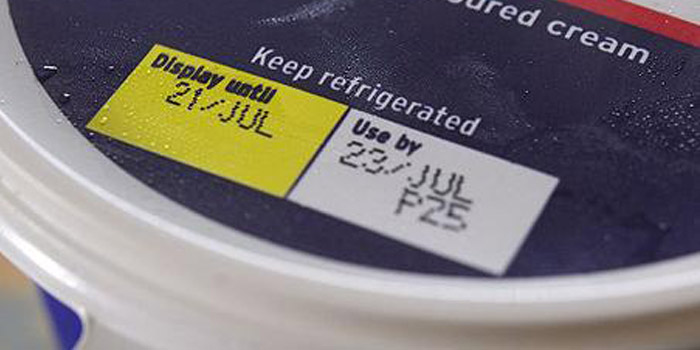
Learn how to read food product dates. Aside from infant formula, food product dating is not a requirement of the federal government. Product dating is mostly used by manufacturers to provide consumers an estimated time frame for which a product will be of the best quality. These dates are generally not an indicator of a product’s safety. The two standard phrases applied to products that have been unopened and stored properly are “use by” and “best if used by.” “Use by” date informs us that a perishable product should be eaten by the date listed on the package or discarded if the date has passed. “Best if used by” informs consumers that beyond the date listed, the product has exceeded the window of optimal taste.
Learn how to store food properly. The USDA’s FoodKeeper App is a virtual tool that provides information on safe food handling and storage for refrigerator, freezer and pantry products. The USDA’s refrigerator and freezer storage chart is also a food safety and storage guide. Place this chart on your refrigerator door as a helpful reference. Remember to keep your refrigerator at or below 40°F and your freezer at 0°F to prevent food from spoiling too quickly.
Eat mindfully. Before heading to the market, plan out your meals and make a list of what you need for the upcoming weeks. Raid your fridge and pantry to find items you already have or can use as a substitute in your recipes. Don’t buy more food than you can eat before it goes bad. Buying in bulk doesn’t save you money if you end up throwing the product away due to spoilage. Almost any food can be frozen so, don’t be afraid to freeze foods like fruits and vegetables for later use.
If you have questions about food safety, contact the Purdue Extension Elkhart County office at (574) 533-0554 or email [email protected]. The USDA Meat & Poultry Hotline is another helpful resource. They can be reached toll-free at (888) 674-6854. The hotline is open year-round and can be reached from 10 a.m. to 6 p.m. Monday through Friday. You can also email questions to [email protected]