Tips To Protect Your Skin This Summer
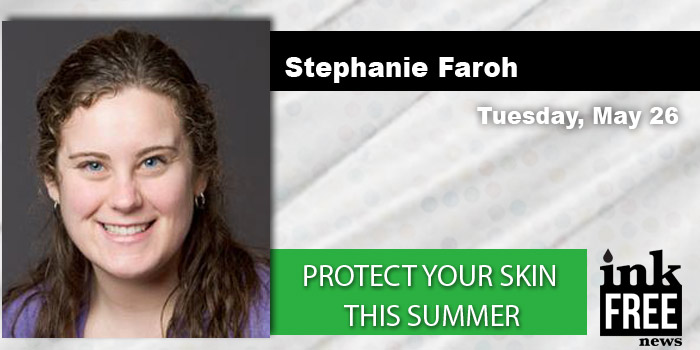
 By STEPHANIE FAROH
Extension Educator, Purdue Extension Kosciusko County
Memorial Day is a day for reflection and remembrance. Many mark the weekend as a kick-off to summer too. The sun can feel extraordinary after a long winter, but let’s remember to protect our skin during all the fun this summer.
Skin cancer is an uncontrolled growth or spread of cells or lesions in the skin. Overall, skin cancers affect more people than lung, breast, colon and prostate cancers combined.
The two most common forms of skin cancers are basal cell and squamous cell carcinoma. A third type of skin cancer, melanoma, accounts for less than two percent of skin cancer cases, but causes the most skin cancer deaths. In Indiana during 2012, there were 1,091 new cases of melanoma diagnosed, and 192 melanoma deaths.
People of all ages, races and ethnicities are subject to developing skin cancer. Excessive exposure to ultraviolet (UV) radiation from the sun or other sources, such as tanning beds, is the greatest risk factor for developing skin cancer.
The best way to detect skin cancer early is to recognize changes in skin growths or the appearance of new growths. We should all use the ABCDE rule when looking for signs of melanoma.
“A” Asymmetry – One half is unlike the other half.
“B” Border – An irregular, scalloped or poorly defined border.
“C” Color – If color is varied from one area to another; has shades of tan, brown, or black, or is sometimes white, red or blue.
“D” Diameter – Melanomas are usually greater than 6mm (the size of a pencil eraser) when diagnosed, but they can be smaller.
“E” Evolving – A mole or skin lesion that looks different from the rest or is changing in size, shape, or color.
Melanoma might appear differently than what is described in the ABCDE rule, so discuss any changes to existing moles or new growths on the skin with your health care provider. When in doubt, have it checked out.
To help protect their skin you should:
- Limit or avoid sun exposure during peak hours (10 a.m. to 4 p.m.)
- Wear sunscreen with a Sun Protection Factor (SPF) of 30 or higher that protects you from all UV rays. These are called “broad spectrum” sunscreens
- Wear clothing that has built-in SPF in the fabric or wear protective clothing such as long sleeves and long pants (tightly woven dark fabrics protect your skin better than lightly colored, loosely woven fabrics)
- Wear a hat that protects your scalp and shades your face, neck, and ears
- Avoid use of tanning beds and sun lamps
- Wear sunglasses to protect your eyes from ocular melanoma (melanoma of the eye)
- Always protect your skin, even on cloudy days and during the winter months. Use extra caution around water, snow, and sand as they reflect the sun’s rays. For more information about melanoma and other types of cancer, visit the Indiana Cancer Consortium at http://indianacancer.org/cancer-control-tookit/
Enjoy the sunshine and get your Vitamin D, but please protect your skin. Here’s to a healthier you.
For more information please call Stephanie at the Purdue Extension Kosciusko County office at (574) 372-2340, or email at [email protected].
Purdue University is an affirmative action, equal access/equal opportunity institution