‘Clean Out Your Refrigerator Day’
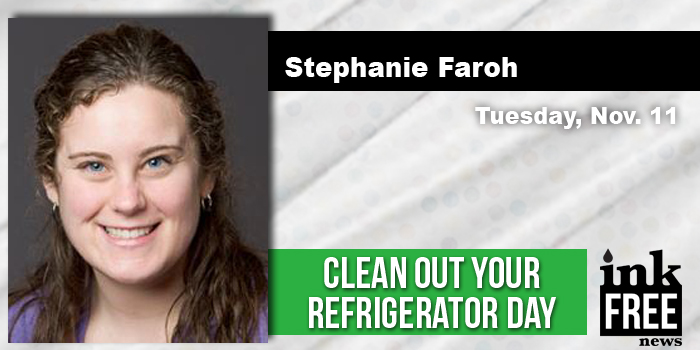
 By STEPHANIE FAROH MA, RD CD
Purdue Extension Educator, Kosciusko County, Health and Human Sciences
When is the last time you cleaned your refrigerator? If it’s been a while, we conveniently have a designated day to help you remember. “Clean Out Your Refrigerator Day” is Saturday, Nov. 15.
Many of us have found items at the bottom of a drawer or in the back of our freezer that should have been thrown out months, or even years ago. Other than taking up room in your refrigerator or freezer, there is not much harm in leaving old items around, until an unsuspecting family member or guest finds something old. Chances are they’ll notice something old before consuming it, but you don’t want to take a chance to get someone sick.
The moral of the story is to try to regularly clean out your refrigerator. I do a quick spot check every week before trash day and do a deeper clean once a month. When I clean my refrigerator, I also check the thermometers to be sure the temperatures are steady and that my refrigerator is working properly.
Did you know that your refrigerator should be at 40°F or lower to slow bacterial growth and maintain quality? Your freezer should be at 0°F, as this temperature will stop bacterial growth.
Keep in mind that freezing does not kill most bacteria, which is why it is so important to properly thaw and prepare foods that have been frozen. Many of the new refrigerators have their own thermometers built in to their system. These are wonderful, but I encourage you to keep a separate thermometer in both your refrigerator and freezer along with the built in thermometer. You should keep your thermometers in the warmest place in your refrigerator. A place away from the cooling unit or on a shelf in the door are good spots. This small investment to help you monitor your temperatures could save you a great amount of money in the long run, along with helping to keep you and your family healthy and safe too.
If you’re not sure how long items will keep in your refrigerator or freezer, the extension program through the University of Nebraska-Lincoln has a great resource called the Food Storage Chart. This can be found online at http://food.unl.edu/safety/chart. You are always encouraged to call your extension educator with further questions.
Let’s clean out our refrigerators on Saturday. You might find items that are still safe and would be delicious in a warm soup or casserole. Happy cleaning!
Here’s to a healthier you!
For more information please call Stephanie at the Purdue Extension Kosciusko County office at (574) 372-2340, or email at [email protected].