Warsaw City Council Votes To Support Residential TIF Districts
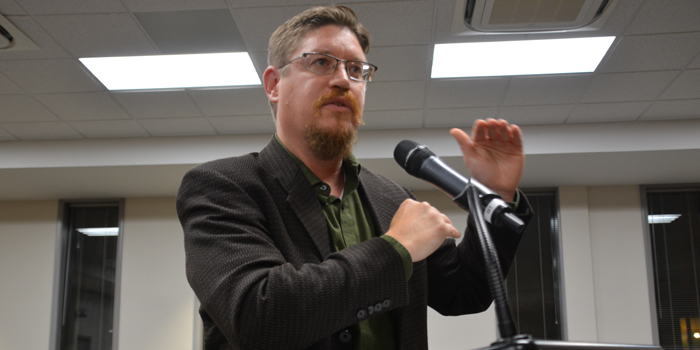

WARSAW — Warsaw City Council passed a resolution supporting establishment of two residential TIF districts during a regular meeting on Monday, Nov. 18.
City Plan Director Jeremy Skinner presented the resolution to council members. Warsaw’s Redevelopment Commission and Plan Commission both approved the resolution in recent meetings.
“It’ll go to the school board for a fourth approval after it’s done here and then goes back to the redevelopment commission in December for the final adoption of the two proposed residential TIFs,” said Skinner.
The proposal for two residential TIF districts in Warsaw follows a new state law that allows taxing units to create tax increment finance districts to help boost residential development. Establishing TIF districts would allow the city to capture new property tax revenue and use it to provide infrastructure for residential development.
The northern district includes the Menards residential development area, Husky Trail, Shadow Lakes and Bella Gusta. The southern district extends from CR 200S on the south end to Warsaw Community High School, and then from Shady Crest to the west and Winona Lake to the east.
“The intended outcome is to promote residential growth in these two areas, not only to help the housing market, but also to help the school district by putting students in seats,” said Skinner. “Both of these districts are primarily targeting single-family residential growth, so we’re not pushing for multi-family, but that’s not to say that can’t happen.”
Skinner told council members that the city is waiting for the completion of a housing study.
“We’re doing that in partnership with the county and the Community Foundation,” said Skinner. “We’re hoping that gives us a good idea of what our pricing target is, but we think it’s somewhere in between $175,000 and $225,000. That would be considered market rate. We’ve got a low supply and high demand, so prices continue to climb. If we can increase the supply and lower the demand, prices can go back down. We’ve been told that it’s more expensive to build a house here than it is in Fort Wayne. This is potentially a way to target that problem.”
Mayor Joe Thallemer said there has been no decision on where the funds generated from the potential residential TIFs will be used.
“They could be used as a zero interest loan,” said Thallemer. “They could be used to improve infrastructure or incentivize a developer or builder to create a certain type of home. What we’re doing right now is just making sure we have that tool available to us by getting this done this year. If we wait until after the first of the year, we will not be eligible. This is just one of several tools that we’re working on for a comprehensive housing strategy.”
Councilmember Cindy Dobbins expressed concern with tax dollars tied into TIF districts.
“I know essentially it doesn’t affect the taxes paid by taxpayers outside of the TIF,” said Dobbins. “But it seems like eventually it would almost have to because after 20 years, the tax dollars of a new development are going into the TIF…somebody has to pick up the expenses for plowing the streets and picking up trash and recycling.”
“It’s a double-edged sword,” said Skinner. “That’s kind of the conversation we’ve had with the redevelopment commission on understanding TIFs and what the impact is. If we create a TIF district and it does nothing, you have no impact because you’ve created no growth.”
Skinner then made the comparison to the recent annexation of the Airport Industrial Park.
“If you look at that over the last three years prior to us [the city] taking it over, its AV (assessed value) grew $200,000 in a three-year period,” said Skinner. “The northern TIF’s AV grew $18 million in a three-year period. We’re putting our money where our mouth is to create the growth that is occurring. If you do nothing, the reality is you get nothing.”
In his presentation to council members, Skinner also discussed HPG Network, a regional economic development group out of Fort Wayne that is providing the study.
“A regional housing study basically says that in this region, there needs to be 19,000 housing units built a year across a 11-county region,” said Skinner. “That’s a broad region. For Kosciusko County’s portion I think is between 489 to 630 housing units per year. So that means Warsaw should be building about 96 units a year and we’re not even close to that. We’re three times less than that.”
The resolution passed with a 5-2 vote, with council members Cindy Dobbins and Ron Shoemaker voting in opposition.