Fort Wayne-South Bend Bishop Named In Catholic Sex-Abuse Report
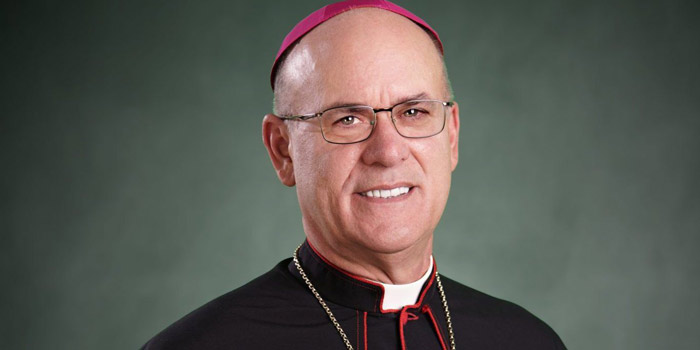

SOUTH BEND — The local Catholic bishop, Kevin Rhoades, confronted at least two instances of alleged priest sexual abuse at his previous post in Pennsylvania, notifying his superiors and law enforcement of the accusations in both cases but also cautioning against publicly releasing the information to avoid “scandal.”
One of the priests, William Presley, was a student, rector and employee at the University of Notre Dame in the 1970s, when some of his abuse allegedly took place.
Rhoades in 2006 recommended that Presley, retired by then, be defrocked.
“Dismissal from the clerical state may be the only means of removing a sexual predator from the ranks of the priesthood,” Rhoades wrote to a Vatican official at the time. “His age is not necessarily an obstacle to his sexual misconduct, given his history. As long as Father William F. Presley remains in the clerical state, I harbor fear for the People of God within the Diocese of Harrisburg.”
But Rhoades also warned that if information about the “violent behavior” of Presley was “to become known, especially in the light of his offers of public assistance at Mass in several parishes, great public scandal would arise within this diocese.”
In the other case, from 2007, Rhoades again notified his superiors and authorities of the allegations. He also noted in a letter that the priest was spending the remainder of his life “in prayer and penance, trying to make reparation for the harm he has caused others through his acts of sexual abuse that occurred early in his priesthood.”
“If his case is now brought to trial or given any kind of publicity,” Rhoades added, “I fear it will cause scandal to many, as he is still a priest who is beloved by many in our diocese.”
The information about Rhoades was included in a grand jury report released Tuesday regarding accusations of sexual abuse by more than 300 priests in several Pennsylvania dioceses. Two priests have been charged so far, and the investigation is ongoing.
Rhoades served as bishop of the Diocese of Harrisburg from 2004 to 2009, before becoming bishop of the Diocese of Fort Wayne-South Bend.
The grand jury report includes a response from Rhoades’ attorneys that takes issue with “out of context” quotes from his letters, and chronicles his efforts to punish the priests and notify law enforcement.
In a statement released Tuesday, Rhoades said, “During my time in Harrisburg and now here in Fort Wayne-South Bend, I have upheld an unwavering commitment to child safety, closely following all policies and procedures put in place.”
In both cases mentioned in the report, Rhoades added, he “followed all child protection policies and procedures, notified law enforcement, and took other action as appropriate, since each of the accused priests had already been removed from public ministry due to previous allegations.”
Earlier this month, the current bishop of Harrisburg, Ronald Gainer, announced that he would strip the names of all the diocese’s bishops dating back to 1947 from any buildings, halls and rooms because they “failed” to protect victims.
No buildings were named after Rhoades, but a room in St. Patrick Cathedral in Harrisburg was, according to diocese spokeman Joseph Aponick. A committee will make recommendations to Gainer for new names on buildings and rooms.
The Pennsylvania grand jury’s report was prepared after hearing testimony from dozens of witnesses and reviewing hundreds of thousands of documents from six dioceses. While 1,000 children were identified as victims, the jury said it believed the real number “is in the thousands.”
The report recommended a series of reforms, including eliminating the statute of limitations for child sex abuse.
The report also names a pair of accused priests who spent time at Notre Dame: Edward Graff, who was at the university from 1963 to 1964, and Stephen Jeselnick, who was there from 1980 to 1981. The alleged abuse did not occur at Notre Dame, according to the report.