
CASPER, WYO. — On July 1, Wyoming put into effect a new law outlawing fake service dogs.
Several other states have a similar law, but what is a real service dog?
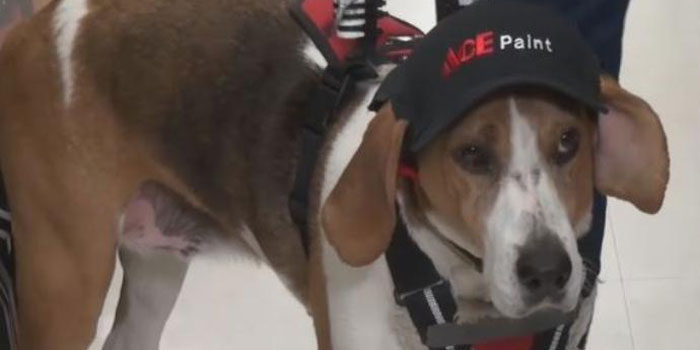
Meet Hank the Hardware Hound. Tom Klindt brings Hank to work with him at the hardware store, and the manager doesn’t mind.
“The customers really like him,” Store Manager Rod Peterson said. “He’s a friendly dog. Everybody wants to pet him.”
Hank stays close to Klindt. The dog provides emotional support, as well as physical support if Klindt falls or loses his balance.
Peterson took a chance on the pair after he got a call from the Wyoming Department of Workforce Services.
“And she called and said she had somebody who was handicapped, and wondered if I would consider bringing him on,” Peterson recalled.
“My coworkers and my bosses have been so welcoming of us as a team,” Klindt said.
Klindt found Hank at the animal shelter after his psychiatrist told him to get an emotional support animal. But, the Americans with Disabilities Act, which requires businesses and other public places to admit service dogs, does not consider a dog whose sole function is to provide comfort or emotional support, a service animal.
Klindt pointed out Hank helps him physically, too.
“He qualifies all standards under the ADA as a service dog. He remains in training and to one degree or the other, he will remain in training for the rest of our lives,” he said.
These are service dogs called “Battle Buddies.”
Without their uniforms, they are playful pups. When the vest is on, they are what trainer Chris Walker calls “Bomb Proof.”
“Bomb proof means that if another dog comes up and starts barking at them, that this dog won’t react,” said Walker, owner of Triple A Dog Training in Wyoming.
Walker trains dogs for combat veterans.
Walker says a service dog must be under control, “All times. Dogs that you see on flexi leads, dogs that you see that are just hooked to the owner, and they have a six foot span, that’s not part of the regulations.”
Walker and Klindt both say there are cases of intentional service dog fraud.
“You can Google a hundred places that you send away a small amount of money and they will send you untested, a certification for your animal as a service animal,” Klindt said.
Klindt said he plans to have Hank tested and certified. Walker said people can train their own service animals with proper guidance.
But, Walker said people who buy the fake certifications and vests make it harder for the veterans with PTSD, who really need a service dog.
“They end up having to battle, trying to explain to people in society that their dog is legit,” Walker said.
Walker’s trained dogs are given to combat veterans for free. Klindt is not a veteran. He said he can’t afford the cost of a trained service dog: $11,000 to $15,000.