In The Garden — Creating A Layered Bulb Bed
 By AMANDA ZAMBRANO
Master Gardener Intern

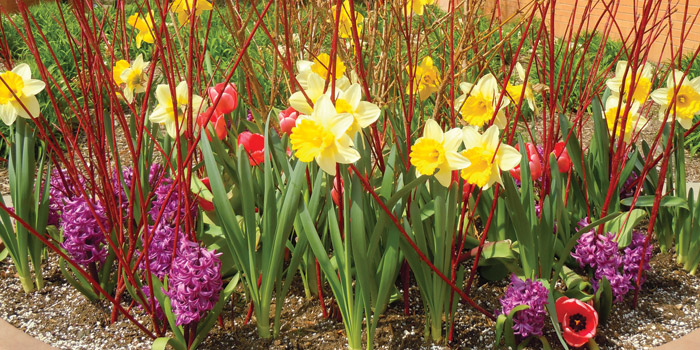
WARSAW — My favorite recent addition to my landscape is a layered bulb bed and fall is the perfect time to add one to your garden. The concept behind the layered bed is to plant your bulbs at appropriate depths so that they bloom in succession, providing color in your early spring garden.
My bed hosts daffodils, tulips, grape hyacinths (muscari) and crocuses. Crocuses always appear first, shortly after the snow has melted and the ground begins to thaw. Depending on the winter, crocuses can start peeking through as early as the end of February, although I typically see mine mid-March.
With a layered bed, I’ll continue to have flowers through mid-May. Look for bulbs that bloom at different points in the season so that they overlap and give you continuous color throughout the spring. Be sure to pair your bulb bed with something that will fill in and bring color during the rest of the year.
Select a spot that is full sun during the winter. While I have a shady yard, when the trees are bare, I’ve got some spots that have full sun in winter time. You’ll want to create a “bulb lasagna” — layers of bulbs with soil and bone meal. You’ll also want as many bulbs as you can manage. My beds are a bit sparse, which is okay, but that means it will take a few years, and dividing and replanting, to get a lush looking bed.
Bulbs are great for plant sharing. If you have a friend with an overabundance of daffodils or tulips, now is the perfect time to ask them when they’ll be dividing their beds. Digging up the beds and dividing the bulbs will keep the bed healthy and produce better blooms — and there’s nothing better than free plants!
To start your bulb lasagna, dig down 8-10 inches. Layer in 2 inches of soil and top with a sprinkle of bone meal. Start with your largest bulbs, such as tulips or daffodils. Space them no more than half an inch apart if you are able. Your largest bulbs should be roughly 6-8 inches deep. Cover with 2 inches of soil, sprinkle in some bone meal, and you’re ready to start your next layer.
The next layer is for your mid-sized bulbs, such as Dutch hyacinths and narcissus. Again, place bulbs about half an inch apart. Cover with 2 inches of soil and sprinkle with bone meal. The final layer is for the smallest bulbs, such as crocuses and grape hyacinths. Top with 3 to 4 inches of soil.
You may want to plan pansies, violas, dianthus or forget-me-nots on top. These will give you color and keep weeds down once the bulbs have died back.
Now all you have to do is wait for spring!
Amanda Zambrano is the director of advancement at Grace Village Retirement Community. She is a master gardener intern, just learning the ins and outs of successful gardening.
Along with her master gardener volunteering, Amanda serves on the board of directors for the Wagon Wheel Center for the Arts, the Symphony of the Lakes committee and a Kosciusko County Community Foundation scholarship committee. She plays flute for the Symphony of the Lakes and enjoys hand-quilting, baking and reading. She is also an occasional blogger. Amanda lives in Warsaw with her husband Dan and her son Alexander.