In The Garden — Transplanting Part II

By Joyce Corson
Master Gardener
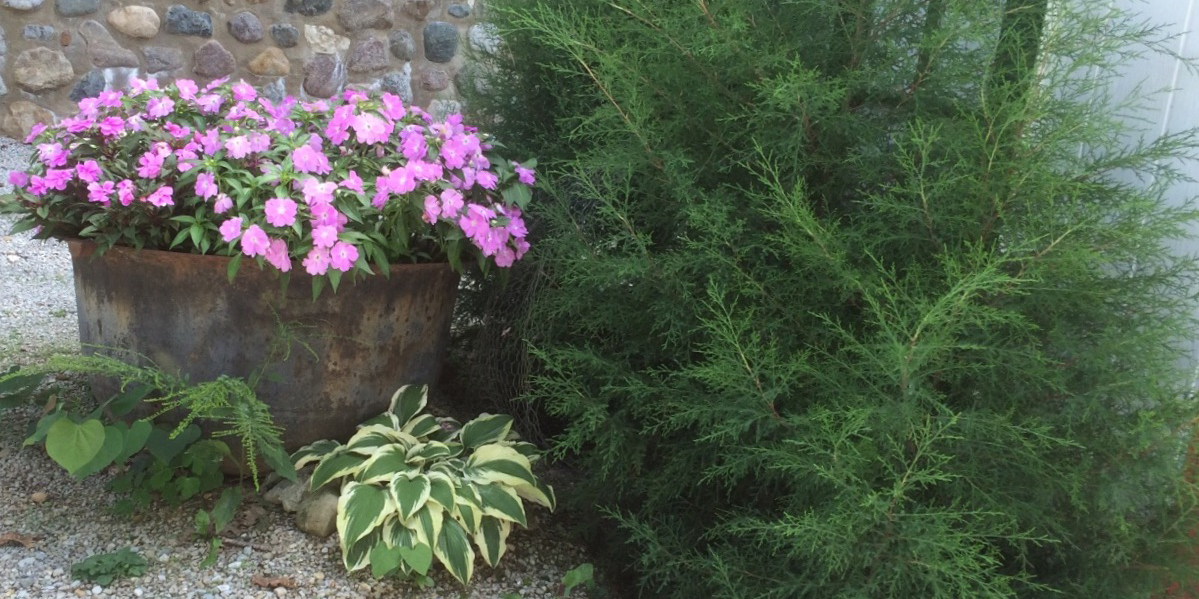
Eastern Red Cedar, Sunpatiens and Winter Warrior Hosta. Those ready to be moved are the Eastern Red Cedar and the Hosta. The Sunpatiens are annuals and will not survive outside over the winter.
The most exciting thing about my garden is finding something new that I did not plant. Some examples are native Eastern Red Cedar, Redbud, Oak, Sassafras and Hickory trees; all planted by squirrels or birds, or hitchhiking from an unknown rides. By cultivating early as seedlings these can be removed, but if left to grow they can contribute to the understory or cover to the earth replacing those lost to deforestation, disease or accident. Those you choose to save can be moved to more desirable locations or given to interested friends in the months of October or November.
With a reprieve from Mother Nature, the warm season of October often extend unto us one more week, in the days called “Indian Summer”, which may go into a couple of weeks of November. When European settlers first came across the phenomenon in America it became known as the Indian’s summer. It refers to many situations involving weather patterns and the desire of the gardener taking advantage the pleasures growing flowers, trees and shrubs.
With garden design in mind, I pretty well know by now which I need to replace, add to or begin a new slice to my garden which by now has extended to most of the property we have on Papakeechie Lake. This year I am going to move around some of the eastern red cedar trees that I have planted close to our house under a captive eye making sure they grow well by pruning and keeping them with water. They can sometimes grow faster than you think, and before long they may be too large to move!
Some tips on transplanting include, the knowledge that planting in October they will survive, after the life or sap drains into the root or brain, leaves turn brown and drop, the plant will stay alive. They have all their life to live using our power as gardeners giving them our love which includes location, length of growing time, and making sure the lawn mower can easily navigate around their future space.
Follow these steps to assure longevity for next year:
1. Dig the space into the ground for the new tree, ending with solid soil beneath for the roots, tap or fibrous, to rest upon.
2. Depth should be measured by size of root, and stalk ending at the earth’s surface leaving new space for spring growth.
3. The soil around the roots where the tree or plant was growing should be duplicated. If extra soil is needed use compost or seed bed soil adding no additional fertilizer. The roots are resting now and only moisture, not standing water is needed and can be added until earth is frozen. This move should not cause trauma to the brain of the plant, which is now asleep. Press the soil gently and do not bury the trunk. If the roots are too big and you can’t cut them all, cut the tough ones, re-cover the root system so new fibrous roots can grow and finish the process the next season of October. This system can be applied if you want to reduce the size of tree or you don’t want to kill it in the moving process. This is a tip from the bonsai enthusiast.
The worst case scenario may be not waiting for the leaves to drop and not accumulating adequate root system. This could cause trauma with in and the tree or plant may not recover.