Meet The Woman Rescuing D.C.’s Orphaned Street Kittens
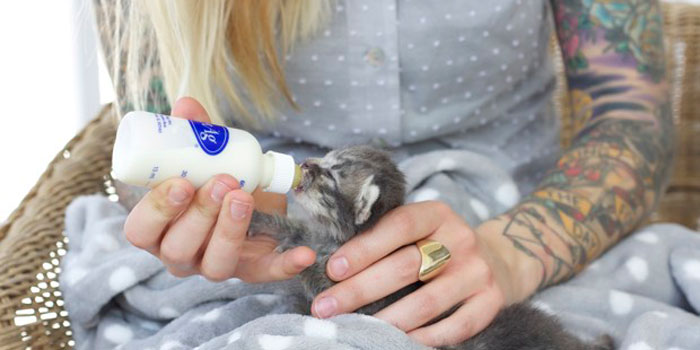

WASHINGTON D.C. — Hannah Shaw finds abandoned kittens everywhere. She discovered two in a friend’s backyard compost bin. (The names Earthworm and Scraps seemed to fit.) She spotted another cowering in a tree in Philadelphia. “I climbed up, put her in my shirt, climbed back down, and thought, “Oh, s…! What am I supposed to do?” Shaw recalls.
She felt like she had to do something. After all, on city streets, orphaned neonatal kittens don’t stand much of a chance. If their mother is killed, taken to a shelter, or disappears, Shaw says that the litter is unlikely to survive. Left to fend for themselves, newborn kittens can quickly develop life-threatening malnutrition or infections.
Shaw has been rescuing kittens for the better part of a decade. By now, she says, “I have kitten radar like crazy. If there’s an orphaned kitten within a mile of me, I will probably know about it.” She wears a red bandana and a T-shirt emblazoned with the moniker “Kitten Lady”—a self-styled, feline-crazed Rosie the Riveter.
Nursing kittens might sound cute — and it definitely is — but for the 28-year-old Washington, D.C. resident, it’s an all-hours job. For the first few weeks of their lives, Shaw says, kittens are essentially “squirmy little jelly beans.” Her tiny charges need constant care. They struggle to regulate their body temperature; their fledgling immune systems put them at risk for dangerous infections. And they can’t control their bowel movements. Whenever they eat, Shaw has to rub their bellies with a warm washcloth, imitating their mother’s tongue.
The problem is, there aren’t a ton of resources for the littlest cats. Caring for them is labor-intensive, and many shelters and veterinarians don’t have enough staff to tackle the challenge. Since kittens aren’t considered adoptable until they’re about eight weeks old, other experts may not have seen ones so young and vulnerable. And even the best intentions can be dangerous. If a young kitten laps up milk from a dish you’ve put outside your apartment, it may cause diharrea; dehydration could be fatal.
In urban environments, free-roaming cats are a common sight—and a controversial one. They may help keep vermin numbers low, but they’re also implicated in the deaths of billions of birds each year. Though it’s hard to pin down the number of “community cats,” the ASPCA estimates that there are tens of millions across the country. The organization endorses trap, neuter, release programs, in which cities round up street cats, spay or neuter them, and return them to their colonies. A study published in PLOS One last year modeled how this method can effectively curb population growth.
Shaw’s a proponent, too. “If you don’t spay and neuter these cats, there’s never going to be an end to the flow of kittens,” she says.
To see more, go to City Lab