Every Day Is Special: Cereal
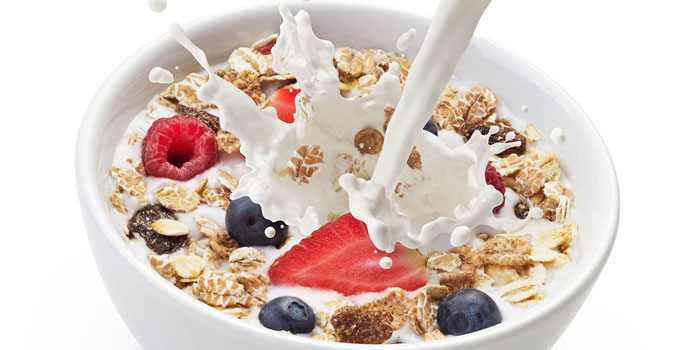
March 7 is National Cereal Day.
The ancestor of today’s sugary, gimmicky, kid-targeted breakfast cereal actually started out as a treatment for sanitarium patients.
The typical American breakfast in the mid-1800s offered less than a healthy start to the day. Morning staples included, almost exclusively, pork, beef, coffee and whiskey. As a result, gastrointestinal problems were rampant among the populace.
Enter Dr. James Caleb Jackson, a Christian fundamentalist, avid abolitionist, health advocate, vegetarian and founder of the Jackson Sanitarium in New York.
The good doctor reasoned that people were not getting enough fiber in their diets, so in 1863 he invented Granula, a mixture of dense bran nuggets and graham flour, to replace the fatty meats folks were eating for breakfast.
Granula was tasteless and had to be soaked overnight to be edible, but the concoction worked and drew a small but faithful following. The cereal was not successful commercially.
One of Dr. Jackson’s patients, Ellen G. White, would later found the Seventh Day Adventist religion. Her church established the Western Health Reform Institute in Battle Creek, Mich., whose chief medical officer was Dr. John Harvey Kellogg.
Dr. Kellogg refined the recipe for Granula and developed several grain-based cereals, patenting the process for making corn flakes in 1896.
One of the sanitarium’s patients, Charles William Post, was inspired by Kellogg’s healthy foods and launched C.W. Post Company, marketing his own version of Granula now known as Grape-Nuts.
The trend caught on. By 1902, 40 cereal brands were being sold across the country. By 1911, 107 brands of corn flakes were produced in Battle Creek alone.
All breakfast cereals were marketed as health foods until 1939, when the first sweetened cereal, Ranger Joe Popped Wheat Honnies, debuted on the northern East Coast.
In the following decades, aided by radio and television advertisements, sweetened cereals became the norm.
Product placement in children’s television programs became a popular marketing technique until 1969, when the FCC prohibited children’s program characters from appearing in commercials during the show.
Since then, sugary cereals have been a favorite breakfast item for kids.
The popularity of breakfast cereal, however, may see rough times ahead. A 2015 survey found almost 40 percent of millennials rejected cereal as a breakfast option because it was too much trouble to clean up afterward.
1. In what year was Corn Flakes first mass marketed?
2. Which is the only Lucky Charms marshmallow that had not changed its shape or color since the cereal was introduced in 1963?
3. Which U.S. city is known as “Cereal City”?
4. Which was the first puffed cereal to hit the market?
5. Who provided the first voice for Toucan Sam, the cartoon mascot for Froot Loops?
6. Which athlete holds the record for the most appearances on the Wheaties cereal box?
7. Which athlete is second?
8. Thurl Ravenscroft, who sang “You’re a Mean One, Mr. Grinch,” also provided the voice for which cereal mascot?
9. Which cereal was eaten aboard Apollo 11 (which made the first moon landing)?
10. Which is the only cereal to have a scientific theory named after it?
1. 1906. 2. The pink heart. 3. Battle Creek, Mich. 4. Kix (in 1937). 5. Mel Blanc. 6. Michael Jordan (18 appearances). 7. Tiger Woods (14). 8. Tony the Tiger. 9. Kellogg’s Corn Flakes. 10. Cheerios.