STD Rates Rise Dramatically, Especially Among Men
[weaver_youtube gnV_TyslqDE rel=0]
Video Source: Centers for Disease Control and Prevention
ATLANTA, GA. — The news in this year’s Centers for Disease Control and Prevention report on sexually transmitted diseases is not good.
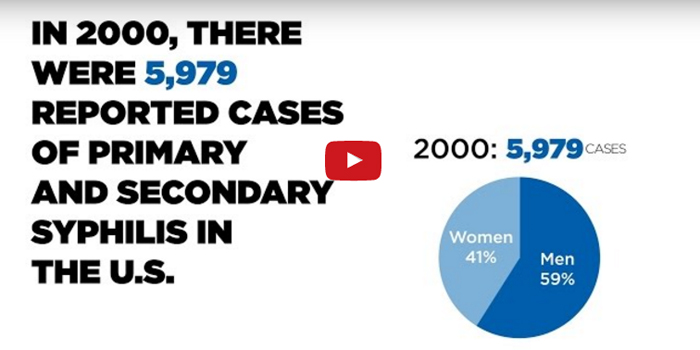
The number of cases of chlamydia and gonorrhea in the United States increased between 2013 and 2014, after being on the decline for several years. Cases of syphilis, which have been on the rise for the last decade, shot up in 2014.
Chlamydia, gonorrhea and syphilis are the three most common STDs in the United States that are also notifiable, meaning health departments are required to report new cases to the CDC. (HIV and shigella are also notifiable STDs.)
Chlamydia is the most common and can damage a woman’s reproductive system. The report found that in 2014 there were more than 1.4 million cases of chlamydia, or about 456 for every 100,000 people. There are about 350,000 cases (or 111 for every 100,000 people) of gonorrhea, which causes infections. And there are nearly 20,000 cases (six for every 100,000 people) of syphilis, which if left untreated can lead to serious complications, including blindness.
All three are curable with medication and you can decrease your chances of getting them by practicing safe sex. These numbers represent an increase in chlamydia, gonorrhea and syphilis cases of 2.8 percent, 5.1 percent and 15.1 percent, respectively, between 2013 and 2014.
“This is a bare minimum of the number of infections occurring in the U.S.,” said Dr. Gail Bolan, director of CDC’s Division of Sexually Transmitted Disease Prevention, and lead author of the report, which was released on Tuesday.
There could be many cases that went undiagnosed because the infections did not cause symptoms, which is typical of chlamydia and gonorrhea, and because people did not have access to health care or their providers did not test them, Bolan said.
Part of the reason for the increase in gonorrhea and syphilis could be that men have condom burnout, or are less likely to wear condoms because infections such as HIV are more treatable and do not seem as scary, Mark said.
“There is no clear single answer” to explain the rise in gonorrhea and syphilis, particularly among men, Bolan said.
Clinics that provided STD testing and treatment across the United States have had to close or shorten their hours, Bolan said. Although it is unclear the full extent of these closures. The CDC does not track access to health care services the same way it tracks diseases; reports suggest many states have cut funding for STD programs, at least since the 2008 recession.
These cutbacks could affect those with poor access to health care, and particularly men who have sex with men. “We know there is still a lot of homophobia and stigma toward our gay communities in the U.S., and a lot of people may prefer to see a provider … that provides culturally sensitive services.”
The finding that rates of these STDs were increasing among men in particular should remind women to do everything they can to protect themselves and use a condom. “And even if you do that, there are still a million reasons why you should be screened. It’s not expensive and it could save you as a woman all the heartache associated with downstream effects, such as infertility and poor pregnancy outcomes,” Riley said.
The CDC report made several recommendations, including for women younger than 25 who are sexually active, and women of all ages who have new or multiple sex partners, to get screened annually for chlamydia and gonorrhea. Men who have sex with men should ask their doctor for chlamydia, gonorrhea, syphilis and HIV tests at least once a year.
Source: CNN