Social Bees And Wasps

By JEFF BURBRINK
Extension Educator, Purdue Extension Elkhart County
GOSHEN — The term social bees and wasps refers to insects like honeybees, hornets and yellow jackets that live in a mutually beneficial group to help the species survive. Ironically, humans often fear these creatures because of the anti-social behavior they have when provoked.

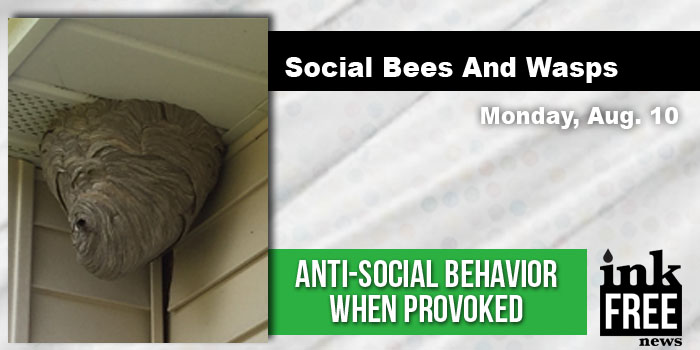
Take hornets for instance. In mid-to-late summer, homeowners often discover large paper nests buzzing with activity. Often these nests are high off the ground in low traffic areas and need not be removed.
At other times, the hornets nest can be inconveniently located near a door or under a deck, where noise or activity can unintentionally stir up the nest. An aerosol can of wasp and hornet killer, sprayed directly at the nest entry point and applied over a three-day span can get that under control.
Yellow jackets can be more troubling. There are several species of yellow jackets in Indiana, many of which the public generally refer to as bees. In late summer, they switch over to a high carbohydrate diet as they prepare for winter, and can often be found rummaging around trash cans, pop bottles and picnics. Inevitably, the chance of human/insect confrontation goes up every August.
Yellow jacket nesting habits also expose them to potential human contact. Some yellow jacket species prefer to nest in trees and on occasion, the nests are mistakenly built into the walls of our homes. The first instinct many humans have is to plug the hole. That is not a good idea, for the yellow jackets will begin to seek a way out and it might be through your living room or bedroom.
When found in the wall, it is important to know the nest may actually be several yards from the entry point. Most homeowners do not have the equipment needed to reach the nest and knock it out permanently. I usually suggest a professional exterminator should be called in for in-the-wall nests.
There are other types of yellow jackets that nest in the ground. The nest is hollowed out one grain of sand at a time, right under the surface of the lawn, and may reach the size of a basketball. These are the nests I worry about the most because unsuspecting people or pets can stumble into the paper nest, or hit it with a mower.
There are several strategies to treat ground nesting yellow jackets. Aerosol wasp and hornet killers will work to knock them down. You can follow up later when things calm down with an insecticide dust that contains carbaryl or permethrin, which will stick to the insects bodies and travel further into the nest.
There are a few bait stations on the market for capturing these insects. They do not do a good job of emptying a nest, but can reduce the insects around trash cans, picnics and other areas they forage.
For more information, check out Purdue Extension publication E-44 on its website.