Enormous Nest Turning Heads In Warsaw
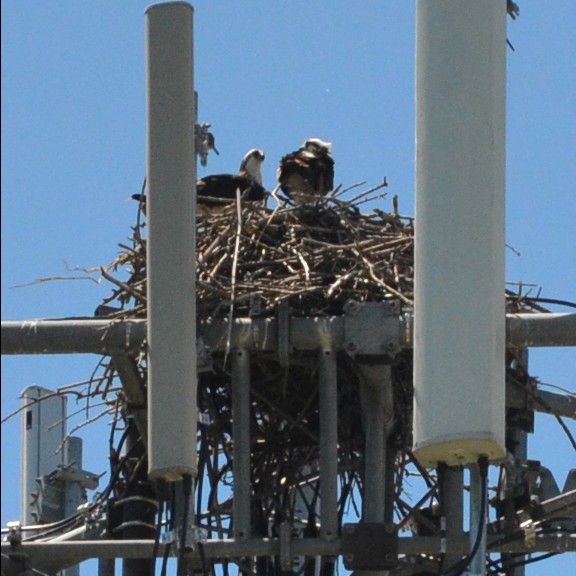

An enormous nest located on top of a cell phone tower off of Lake Street in Warsaw has caught the eye of several passing by.
StaceyPageOnline.com took a moment to stop by and try to capture a picture of the creatures living in the mammoth nest, which are believed to be osprey, a large bird of prey that dwells near lakes and rivers in Indiana.
According to the Indiana Department of Natural Resources, an adult osprey is blackish-brown on it’s back and shoulder areas with a white on the underside of its body. The breast of the bird is white and sometimes shows a brown band, especially in females. The DNR notes that the head is mostly white with a broad black stripe extending from the eyes to the back with black bills and talons and orange or yellow eyes. Ospreys range from 21″ to 25″ with a wingspan of 59″ to 67″.

Though the osprey is one of the most widely distributed birds in the world (found on every continent except Antarctica) the DNR reports that the osprey is on the State Endangered Species List. Populations of osprey declined rapidly in the 1950’s to 1970’s due to poaching, DDT and loss of breeding grounds. The DNR reports that in 2012, there were 49 active nests throughout the state. Nesting was reported in Morgan County, Parke County, Porter County and Posey County.
Osprey primarily feed on fish and are known to plunge into water for prey, often times becoming fully submerged for a second as it dives for its prey. Osprey are also known to occasionally eat rodents, birds and small vertebrates and crustaceans. According to the DNR the bird is the only raptor to plunge into the water for prey.
A typical osprey nest is built near the water between 10 to 60 feet above the ground on the tops of trees and a variety of structures such as power poles, chimneys, channel makers and more. The nest is built of sticks and lined with grasses, seaweed, moss, lichens, bark and even mud. Osprey return to the same nest each year, continually adding to it and will defend the nest from attacking intruders. The average clutch size is three but ranges between two to four.